


Better, faster, more strategic UX
© 2025 BuildUX


Better, faster, more strategic UX
© 2025 BuildUX

Define distinct user groups to focus on your core audience. Build products that solve key problems and prioritize valuable features.

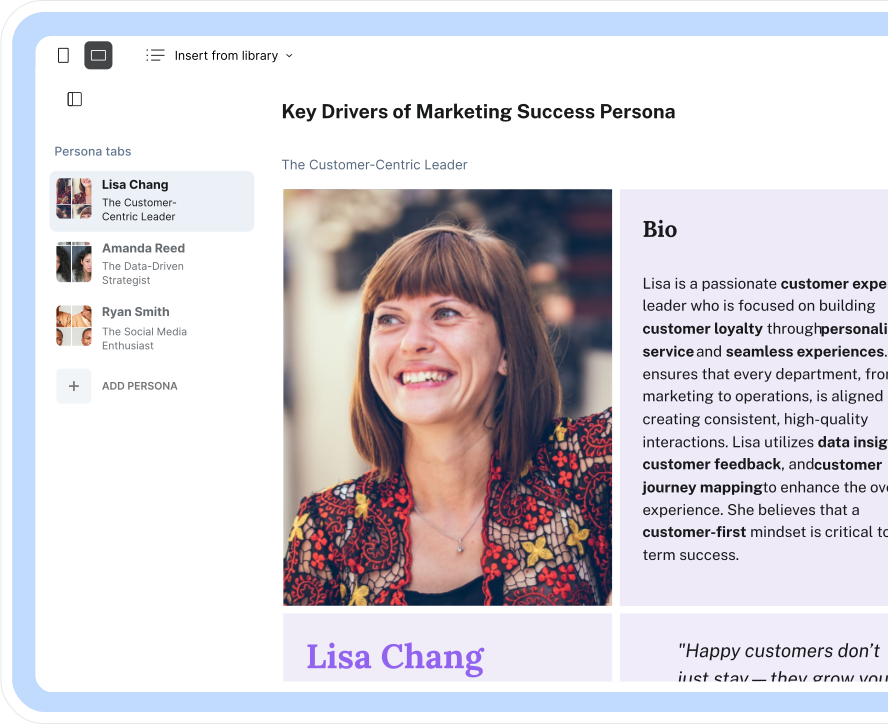
Identify user patterns and groups. Tailor features that truly meet their needs and enhance their experience.

Get everyone on the same page. Ensure everyone supports feature decisions that serve the same user goals.

Have a clear understanding of your users. Identify and build key features that drive business growth.








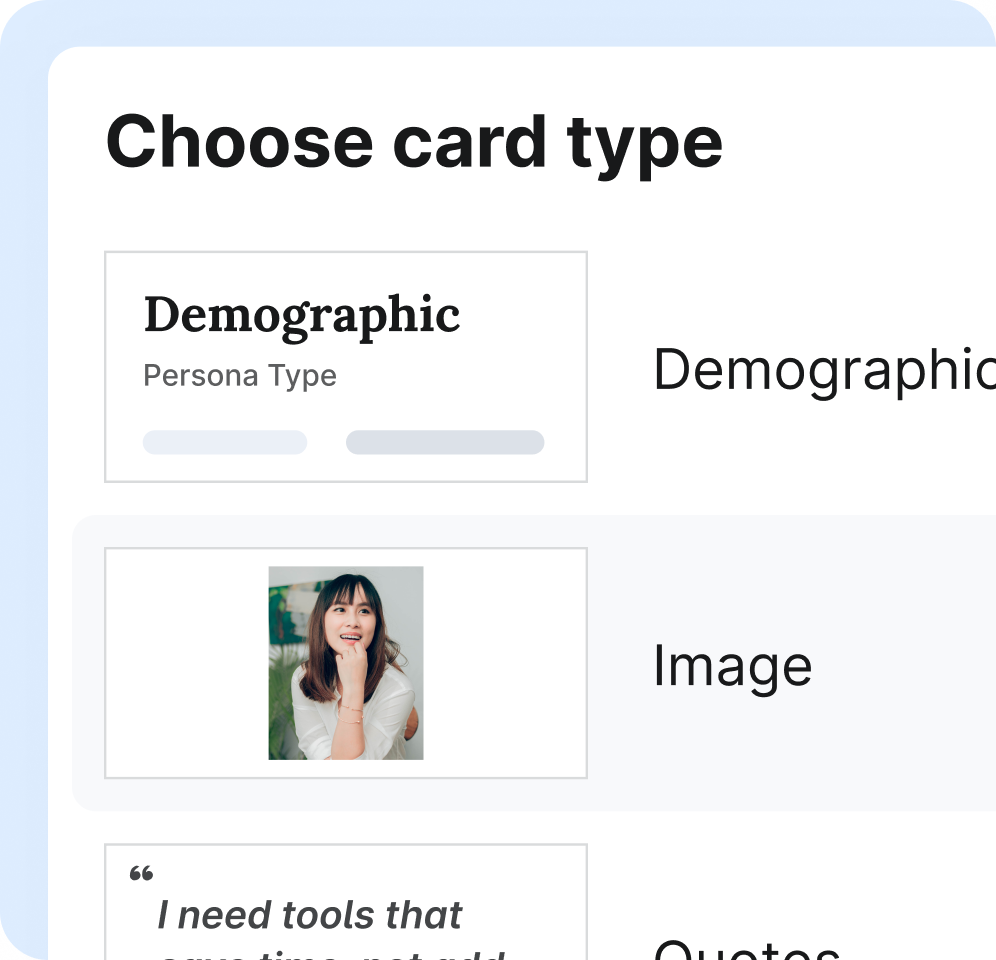
Select your type of card based on
your requirement.
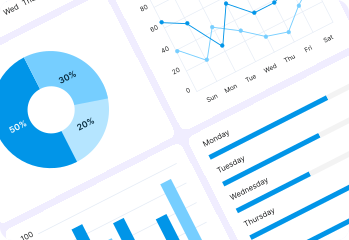
It’s not a text document. Add information in any form.
Don’t let your insights sit. Share it with your team.
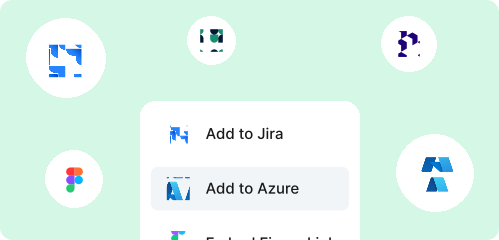
Add tasks to Jira or Azure and get your plan rolling.
Make your project visually appealing - the way you like it.

Toggle Personas’ visibility. Show only what’s required.
How do I create my own persona?

Creating your own persona involves gathering evidence about a user segment's goals, motivations, pain points, behaviors, and context rather than relying on assumptions or stereotypes. This is typically done by synthesizing qualitative interviews, usage patterns, behavior analytics, and support insights into a profile that reflects how a group of users approaches tasks and makes decisions. A persona matters when it acts as a design reference that clarifies what users need to succeed, rather than a descriptive document that collects information for its own sake.
What is a persona tool?
A persona tool is a structured workspace that helps UX and product teams organize research findings into clear and comparable persona profiles. It is used to collect inputs like goals, frustrations, motivations, workflows, environmental context, and constraints in a format that supports analysis and prioritization. This matters because consistent persona documentation enables teams to reference the same definitions of "who we're designing for," reducing opinion-driven decision-making and keeping design investments aligned with user needs.
What is a persona generator?
A persona generator is a tool that helps convert user research data into complete persona profiles by guiding teams through inputs such as behavior patterns, needs, emotional drivers, and success criteria. It is applied to speed up the synthesis process and ensure persona creation is structured rather than ad-hoc. This matters because generating personas from real patterns — not personal intuition — improves the accuracy of UX and product decisions and increases the likelihood that design changes support measurable user success.
How to generate a persona?
Generating a persona involves identifying a user segment with distinct behaviors or goals, collecting evidence about how they think and work, and synthesizing those findings into a profile that explains what drives success or struggle for that group. The process typically includes defining goals, motivations, frustrations, behavior patterns, triggers, and environmental context. This matters because the quality of the persona determines how well it guides prioritization — a persona rooted in real patterns drives far better UX and product outcomes than one based on opinions or demographics.
What is a buyer persona template?
A buyer persona template is a structured format for capturing the motivations, purchase triggers, objections, and decision criteria of a customer segment. It guides teams in gathering and organizing qualitative and quantitative insight. This matters because decisions grounded in how customers actually evaluate solutions consistently outperform intuition-driven strategy.
Why are buyer personas important?
Buyer personas are important because they align product and marketing decisions with the psychological drivers behind buying behavior rather than internal assumptions. They are used to understand what buyers value, what holds them back, and what creates urgency. This leads to clearer messaging, more resonant value propositions, and better prioritization across teams.
How to create a buyer persona?
A buyer persona is created by synthesizing interviews, CRM data, objection patterns, and behavioral insights into a profile that represents how a specific customer group thinks and makes decisions. The emphasis is on motivations and evaluation criteria rather than demographics. This matters because buying behavior is shaped by goals and risks, not by surface traits.
How to use buyer personas?
Buyer personas are used to guide decisions about which customer problems to address, how to position value, how to remove objections, and how to support users post-purchase. They help product, marketing, and sales teams stay aligned around the same customer reality. This ensures that investment and messaging consistently reinforce conversion and long-term success.
What are the 4 types of buyer persona?
In the context of UX and product strategy, the four most useful buyer persona types are 1) primary personas who drive most revenue, 2) secondary personas who matter but do not shape the core strategy, 3) negative personas representing customers you intentionally do not target, and 4) influencer personas who do not buy directly but affect the decision. This matters because segmenting personas by strategic value sharpens focus and prevents effort from being diluted across low-impact audiences.
What do you do with buyer personas?
Buyer personas serve as a reference for validating priorities by ensuring that features, messaging, pricing, and onboarding align with what buyers expect to accomplish. They are applied when determining which problems deserve attention and how to communicate solutions effectively. This matters because alignment with buyer motivations is a proven driver of adoption and retention.
What is the goal of a buyer persona?
The goal of a buyer persona is to ensure a company builds and communicates solutions that align with how buyers perceive value and evaluate risks. It is used to reduce guesswork in product and go-to-market decisions. This matters because accurate understanding of the customer drives long-term success more reliably than persuasion tactics.
What are user personas best examples?
The best user persona examples focus on goals, motivations, pain points, and behavioral patterns rather than demographic stereotypes. They describe the user in terms of how they approach tasks and what shapes their success or failure. This matters because personas are only useful when they lead to different UX and product decisions.
How do I choose a user persona?
User personas should be selected based on behavioral segmentation, clear differences in needs, workflows, or motivation, rather than demographic profiles. The persona chosen should meaningfully impact design and feature prioritization. This matters because designing for demographic clusters rarely improves usability, while designing for behavioral patterns does.
What is a user persona?
A user persona is a research-driven profile that represents a segment of real users whose behaviors, goals, and frustrations meaningfully influence design decisions. It is created from patterns observed across research rather than from fictional speculation. This matters because personas anchor product development in user reality rather than opinion.
Why are user personas important?
User personas are important because they align cross-functional teams on who they are building for and what outcomes matter most to those users. They help prevent decisions driven by internal bias or the loudest stakeholder. This matters because prioritizing user-defined success leads directly to more intuitive and effective products.
How do I create a user persona template?
A user persona template is created by including fields such as goals, motivations, frustrations, behavioral patterns, environment, and constraints. These fields are selected based on which factors influence UX and product decisions. This matters because a template is only valuable when it drives clarity, not when it collects information for its own sake.
User persona examples
Common persona examples include guidance-seeking users who rely on simplicity and reassurance, expert users who prioritize speed and control, and risk-averse users who need certainty and error-prevention. These examples illustrate how different behavioral drivers produce different UX requirements.
