


Better, faster, more strategic UX

© 2025 BuildUX


Better, faster, more strategic UX
© 2025 BuildUX

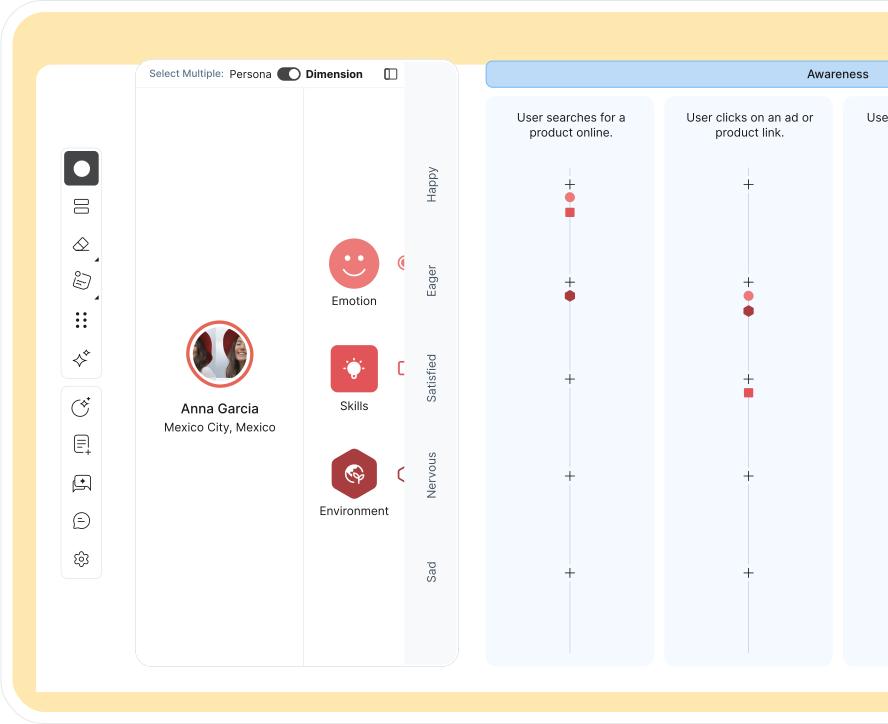
Ensure user journey flows are clearly documented. Share them in a way that's easy to understand. Work easily with front-end, back-end, and service teams.

Use visuals, fewer words, and highlight key points. This helps stakeholders quickly understand user journeys and give feedback without long reviews.

Understand the full customer journey, not just parts. Design thoughtful, proactive service strategies that truly support your customers.

Compare before-and-after user journeys. Validate if design changes lead to real improvements in the customer experience.









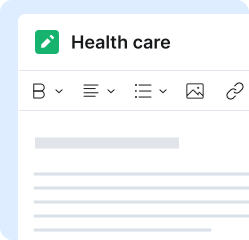
Make quick notes for deeper
insights.
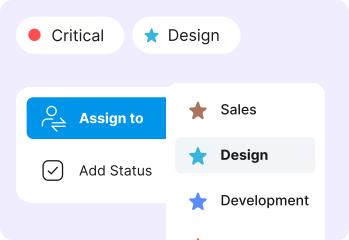
Highlight key insights and assign them to
your team
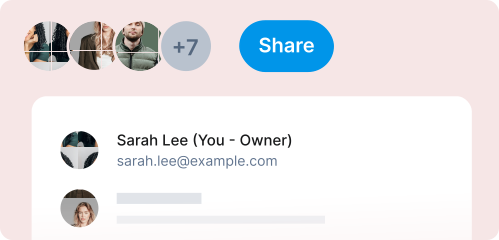
Don’t let your insights sit. Share it with your team.
Add tasks to Jira or Azure and get your plan
rolling.
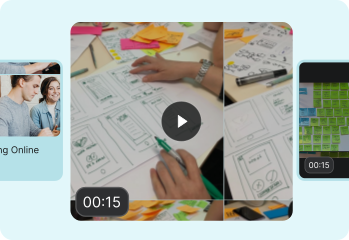
Add images & videos to add more
context
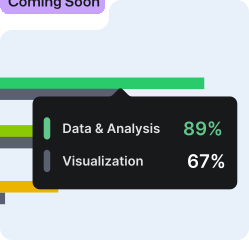
Analyze the moments that
matter most in your user
experience.
What is the best customer journey mapping tool?

The best customer journey mapping tool is one that helps teams visualize user actions, motivations, and emotions across stages while also supporting collaboration and prioritization. It is used to expose where the customer experience accelerates progress and where it breaks down. This matters because journey insights only create value when they drive product and service decisions, not when they remain static diagrams.
What is a customer journey mapping tool?
A customer journey mapping tool visualizes the stages of a customer's lifecycle along with their interactions, challenges, and emotional responses. It provides structure for consolidating research and cross-team understanding. This matters because experience cannot be improved without understanding how it unfolds from the customer's perspective.
What are the 7 steps to map the customer journey?
In the context of UX and customer experience strategy, the seven steps to map the customer journey are 1) defining the target persona, 2) outlining the main stages of the journey, 3) identifying touchpoints and actions within each stage, 4) documenting motivations and emotions, 5) exposing friction and breakdowns, 6) translating insights into opportunities, and 7) aligning teams on next steps. Following this structure matters because it ensures the journey map becomes a driver of prioritization rather than a descriptive report.
How do I create a customer journey map?
A customer journey map is created by selecting a persona, mapping the stages of their experience, and documenting what they do, think, and feel at each stage. It is then analyzed to surface where the experience supports momentum and where it disrupts it. This matters because friction points are most meaningful when connected to real user goals and behaviors.
What is the best customer journey mapping software?
The best customer journey mapping software enables teams to record insights, assign ownership, and connect journey findings to improvements, not just visualize the experience. It is used to support collaboration across product, design, operations, and support. This matters because customer experience outcomes require alignment, not simply observation.
What is the best way to map a customer journey?
The best way to map a customer journey is to ground it in real research, consider both emotional and functional dimensions, and tie every insight to an operational owner or improvement plan. It is applied as a living reference rather than a one-time artifact. This matters because customer experience changes only when insights drive execution.
How to map a user journey?
Mapping a user journey involves outlining the steps a user takes to reach a goal and documenting motivations, expectations, barriers, and emotional reactions along the way. It is applied to uncover where the experience supports or blocks progress. This matters because improvements are most effective when they target the moments with the highest behavioral impact.
What are the 5 stages of the user journey?
In the context of UX and product adoption, the five stages of the user journey are 1) Awareness, 2) Consideration, 3) Onboarding or First Use, 4) Product Use or Fulfillment, and 5) Retention or Support. These stages describe the progression from discovering a product to becoming a long-term user. This matters because each stage requires different UX support to prevent drop-off.
How do I create a user journey map?
A user journey map is created by selecting a persona, identifying each step they take to reach their goal, and pinpointing where confusion, friction, or uncertainty delay success. It is applied by linking each insight to a specific improvement action. This matters because journey mapping is valuable only when it leads to prioritized change.
What is user journey mapping?
User journey mapping is the practice of visualizing how a user experiences a product or service across time to understand their motivations, challenges, and emotional reactions. It is used to ensure that UX and product decisions align with real human behavior rather than internal assumptions. This matters because user-centered decisions consistently lead to higher adoption and satisfaction.

